The Commercial Cosmos: Navigating Secular Trends in Space Exploration and Software
An in-depth analysis of the burgeoning private space economy, the strategic redirection of software giants towards artificial intelligence, and the broader macroeconomic implications of cooling inflation and falling oil prices.
The global marketplace currently finds itself perched at a precarious yet exhilarating inflection point, as the traditional engines of growth, predominantly resource-heavy and terrestrially bound, cede ground to a new vanguard of technological frontierism. While geopolitical instability persists in the Middle East, evidenced by the recent cessation of diplomatic overtures between American and Iranian negotiators, the resilience of Western equity markets suggests a profound decoupling of capital from conflict. This resilience is underpinned by two distinct yet increasingly intertwined phenomena: the institutionalisation of the private space sector, epitomized by the ascent of firms such as Space Exploration Technologies Corp (SpaceX), and a fundamental pivot within the global software industry toward generative artificial intelligence. As oil prices retreat and cooling inflation data offers a reprieve to central bankers, the narrative of the global economy is being rewritten by those capable of looking beyond the immediate horizon of the atmospheric and the algorithmic.
The Strategic Ascension of the Private Aerospace Sector
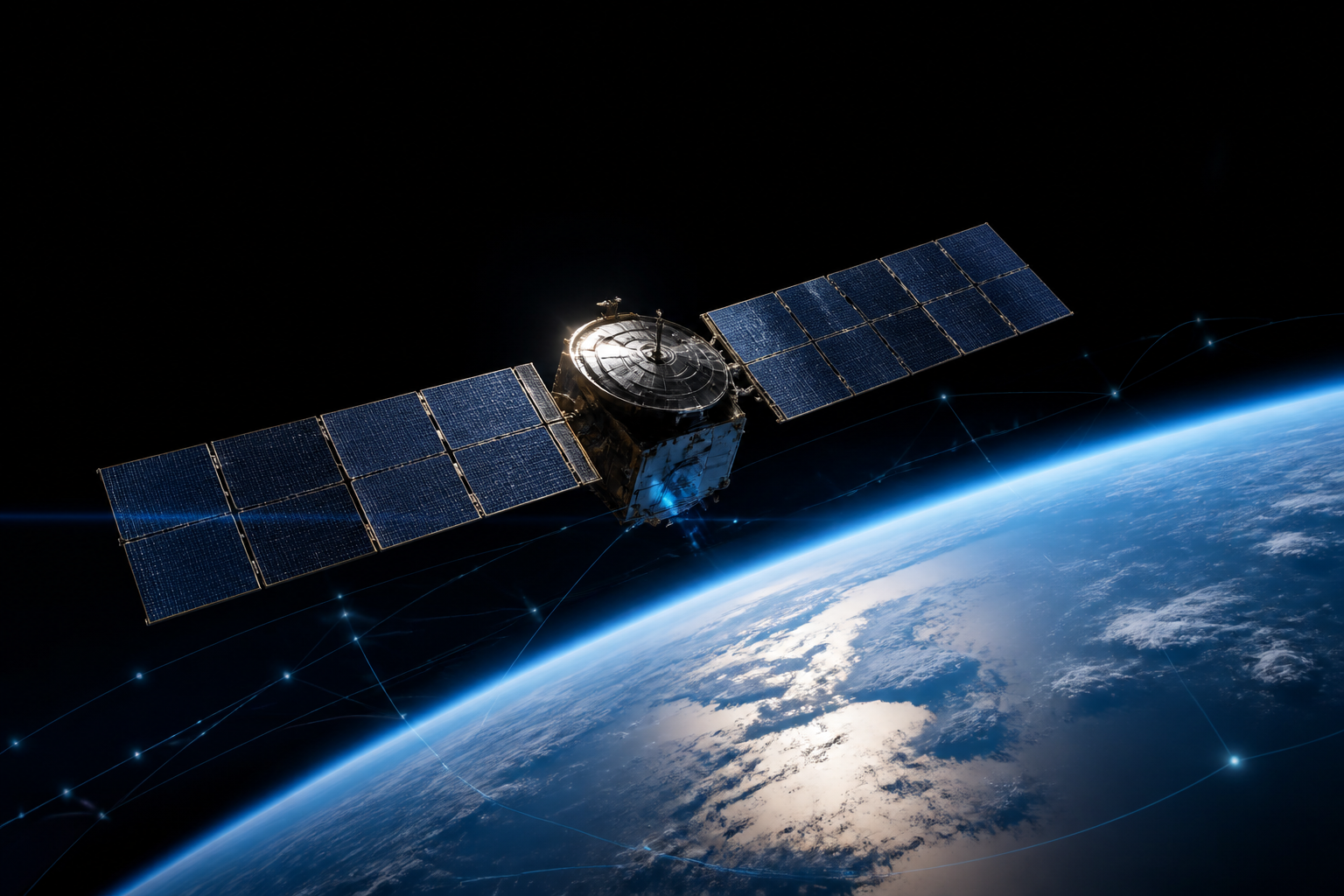
For decades, the final frontier was the exclusive domain of sovereign entities and Cold War posturing. Today, the orbital economy has transitioned into a commercial theatre of unprecedented scale. The performance of the SPCX index and its constituent holdings reflects a broader institutional realization that orbital infrastructure is no longer a speculative vanity project but a fundamental component of the global telecommunications and logistics framework. The success of reusable launch vehicle technology has fundamentally altered the cost-benefit analysis of satellite deployment, enabling a density of low-earth orbit (LEO) constellations that would have been financially ruinous at the turn of the century. This shift is not merely about the logistics of orbital transport; it represents a comprehensive expansion of the available market for data transmission and global monitoring. Institutional investors, previously wary of the capital-intensive and high-risk nature of aerospace, are now treating space exploration as a secular growth theme rather than a cyclical outlier. The capital efficiency brought about by private sector ingenuity is now sufficient to compete directly with, and often surpass, the capabilities of legacy state-sponsored programmes.
Software and the Algorithmic Renewal
The technological sector remains the primary engine of value creation, but the nature of that growth is undergoing a significant metamorphosis. The consensus in the City and on Wall Street suggests that we are approaching the end of the traditional Software-as-a-Service (SaaS) era, to be replaced by an AI-integrated model where intelligence itself is the primary utility. Key economic calendars and earnings forecasts indicate that software conglomerates are reallocating massive tranches of research and development expenditure toward large language models and autonomous system integration. This is not merely an incremental update to existing product suites; it is a ground-up reconstruction of the corporate productivity stack. The recent boost in U.S. stock indices can be partially attributed to the market’s anticipation of high-margin AI applications that promise to mitigate labor shortages and enhance operational efficiency across every sector from finance to advanced manufacturing. However, this transition is not without its risks. The immense computational requirements of these systems necessitate a parallel expansion in data centre infrastructure and specialist semi-conductor supply chains, creating new bottlenecks that savvy market participants are watching closely.
Macroeconomic Tailwinds and the Oil Price Paradox
Underpinning these technological leaps is a macroeconomic environment that is beginning to show signs of stabilisation, albeit one shadowed by the specter of continued high interest rates. The recent drop in crude oil prices has provided a much-needed cooling effect on producer price indices, offering a reprieve to global supply chains that have been stretched thin by years of volatility. Deloittes latest economic updates suggest that while the threat of recession has not been entirely banished, the 'soft landing' scenario has gained significant credibility. Falling energy costs act as a de facto tax cut for both consumers and corporations, freeing up discretionary capital that is increasingly finding its way into growth-oriented equities. This price drop comes despite the aforementioned tensions in the Middle East, suggesting that North American production capacity and a softening of demand in certain slowing industrial hubs are acting as effective buffers against geopolitical supply shocks. The upcoming release of key inflation data on Thursday will be the definitive litmus test for this cooling trend, potentially providing the Federal Reserve and the Bank of England with the justification required to begin discussing a recalibration of their current hawkish postures.
The Geopolitical Friction and Market Decoupling
Evidence from recent trade sessions indicates a curious and perhaps permanent shift in how capital markets react to diplomatic failures. The breakdown in peace talks between Washington and Tehran typically would have triggered a flight to safety, driving gold and treasury yields while depressing equities. Instead, global shares have shown a remarkable degree of insulation from these disruptions. This decoupling suggests that the market has priced in a state of 'perpetual instability,' focusing instead on the tangible earnings potential of domestic industrial policies and long-term technological cycles. The strategic autonomy sought by the West, particularly in areas like semiconductor fabrication and orbital communications, is reducing the systemic sensitivity to regional conflicts. Nevertheless, the risk remains that a significant escalation could disrupt the maritime corridors essential for the hardware components of the very AI and space industries that currently lead the market. The resilience of the current bull run is thus dependent on a delicate balance: the ability of technology to outpace the drag of traditional geopolitics.
Capital Allocation in a High-Rate Environment
Despite the optimism surrounding space and AI, the reality of 'higher for longer' interest rates continues to dictate a more disciplined approach to capital allocation. The era of 'cheap money' that fueled the initial boom of speculative tech startups has been replaced by a rigorous focus on profitability and cash-flow sustainability. This is visible in the recent IPO and earnings calendars, where investors are ruthlessly discounting firms that cannot demonstrate a clear path to black ink. Even in the burgeoning space sector, the focus has shifted from visionary promises to contract backlog and operational execution. The software firms benefiting most from the AI surge are those with existing, robust balance sheets capable of funding the necessary infrastructure without further diluting equity or taking on prohibitively expensive debt. We are seeing a flight to quality that rewards established incumbents who can pivot, rather than unproven disruptors. This trend is consolidating power within a select group of mega-cap entities, raising questions about future competition and the long-term health of the innovation pipeline.
The Outlook for the Decadal Cycle
As we look toward the remainder of the fiscal year and beyond, the convergence of celestial logistics and artificial intelligence will likely define the contours of the global economy. The transition from a terrestrial, carbon-dependent economy to one that is orbital and silicon-driven is no longer the subject of science fiction but a present economic reality. The forward-looking investor must acknowledge that the volatility of the coming months, driven by central bank data releases and electoral cycles across the G7, is merely noise against the signal of this broader secular shift. The cooling of energy prices and the stabilisation of inflation will provide the necessary oxygen for these capital-intensive industries to mature. However, the true winners of this era will be those companies that can successfully bridge the gap between digital intelligence and physical execution. Whether it is the satellite that facilitates global autonomous networks or the software that optimises a nation’s energy grid, the value of the future lies in the integration of the intangible with the infinite. The commercial cosmos is expanding, and with it, the potential for a new epoch of industrial development that transcends our current planetary and cognitive limitations.